The Fastest Funding Path: Community Foundations, Hospital Partners, and Local Grants
While federal and state grants make headlines, community-level funding is where most pharmacy transformation programs actually get started. Community foundations, local hospital partnerships, health department mini-grants, and regional philanthropic programs offer something that federal programs don't: speed, accessibility, and relationship-driven decision-making.
A federal HRSA grant can take 6–12 months from application to first dollar. A community foundation grant can move from initial conversation to funded program in 60–90 days. For pharmacies ready to launch wellness programs, metabolic health services, or Food-as-Medicine initiatives, community funding is often the catalyst that makes everything else possible.
Community grants don't just fund programs — they validate them. A pharmacy with community foundation backing walks into state and federal applications with proof of local support and early results.
Understanding the Community Funding Landscape
Community Foundations
There are more than 800 community foundations across the United States, collectively managing over $120 billion in assets. These foundations exist specifically to fund projects that improve their local communities — and health access is consistently among their top priorities.
Why pharmacies are strong candidates:
- Community foundations prioritize local impact — a pharmacy serving the same community the foundation supports is inherently aligned
- They value innovation — a pharmacy expanding beyond dispensing into wellness and preventive care represents exactly the kind of community health innovation foundations want to fund
- They favor organizations with community trust — pharmacies have built-in credibility that new nonprofits and outside organizations lack
- They appreciate sustainability — a pharmacy-based program has built-in infrastructure and revenue potential that pure grant-funded programs don't
Typical funding range: $5,000–$100,000 per project. Some larger community foundations offer grants up to $250,000 for health-related initiatives.
Application process: Most community foundations use streamlined applications — often 3–5 pages plus a budget. Many accept LOIs (letters of inquiry) first, then invite full proposals. Personal relationships with foundation program officers significantly impact success.
Hospital Community Benefit Programs
Nonprofit hospitals are required by the IRS to conduct Community Health Needs Assessments (CHNAs) every three years and invest in programs that address identified community health needs. This creates a massive, predictable funding source for pharmacy partnerships.
The scale of opportunity: Nonprofit hospitals spend an estimated $130 billion annually on community benefit programs. Much of this goes to uncompensated care, but a growing share funds community health improvement initiatives — exactly where pharmacy wellness programs fit.
How to access hospital community benefit funding:
- Read your local hospital's CHNA. Every nonprofit hospital publishes this document (available on their website or through the IRS Form 990 Schedule H). It identifies the specific health needs the hospital has committed to address.
- Align your program with CHNA priorities. If the CHNA identifies diabetes, obesity, or food insecurity as community needs, your pharmacy wellness program directly addresses those priorities.
- Propose a partnership, not a donation request. Hospitals want partners who extend their reach into the community. A pharmacy-based metabolic health program that reduces emergency department utilization is a compelling value proposition for a hospital CFO.
- Frame outcomes in hospital language. Reduced readmissions, lower ED utilization, improved chronic disease management, expanded community health access — this is what hospital administrators measure.
Partnership models that work:
- Referral partnerships — Hospital refers patients to pharmacy-based wellness programs post-discharge
- Co-funded programs — Hospital provides funding, pharmacy provides delivery infrastructure and staff
- Data-sharing agreements — Shared outcomes tracking that demonstrates community health improvement
- Satellite program hosting — Pharmacy hosts hospital-branded community health programs in its space
Local Health Department Grants
County and city health departments frequently offer small grants and contracts for community-based health programs. These are often the most accessible funding sources for pharmacies because:
- Award sizes are smaller ($2,000–$25,000), meaning less competition
- Applications are simple — often just a 1–2 page proposal and budget
- Decisions are made locally by officials who know your community
- Ongoing contracts are common for organizations that deliver results
Common health department funding categories:
- Diabetes prevention and management programs
- Tobacco cessation programs
- Naloxone distribution and overdose prevention
- Immunization outreach and administration
- Chronic disease screening and referral
- Maternal and child health programs
- Community health education
The RXI Wellness Pharmacy Model
The Wellness Pharmacy Network enables pharmacies to implement evidence-based programs that address nutrient deficiencies, reduce medication dependency, and improve long-term metabolic outcomes.
Building Your Community Funding Strategy
Step 1: Map Your Local Funding Ecosystem
Before writing a single application, understand what's available in your community. Create a local funding map that includes:
- Community foundations serving your county or region (search the Council on Foundations member directory)
- Nonprofit hospitals within 50 miles (review their CHNAs and community benefit reports)
- United Way chapters in your area (many fund health access programs)
- County and city health departments (check their websites for current funding opportunities)
- Local employer wellness programs (large employers often fund community health initiatives)
- Regional philanthropic organizations (Rotary clubs, Lions clubs, faith-based organizations)
- Community development financial institutions (CDFIs) that fund health-related projects
Step 2: Build Relationships Before You Need Money
Community funding is relationship-driven. The most successful pharmacy grant applicants invest time in relationship-building months before they submit an application.
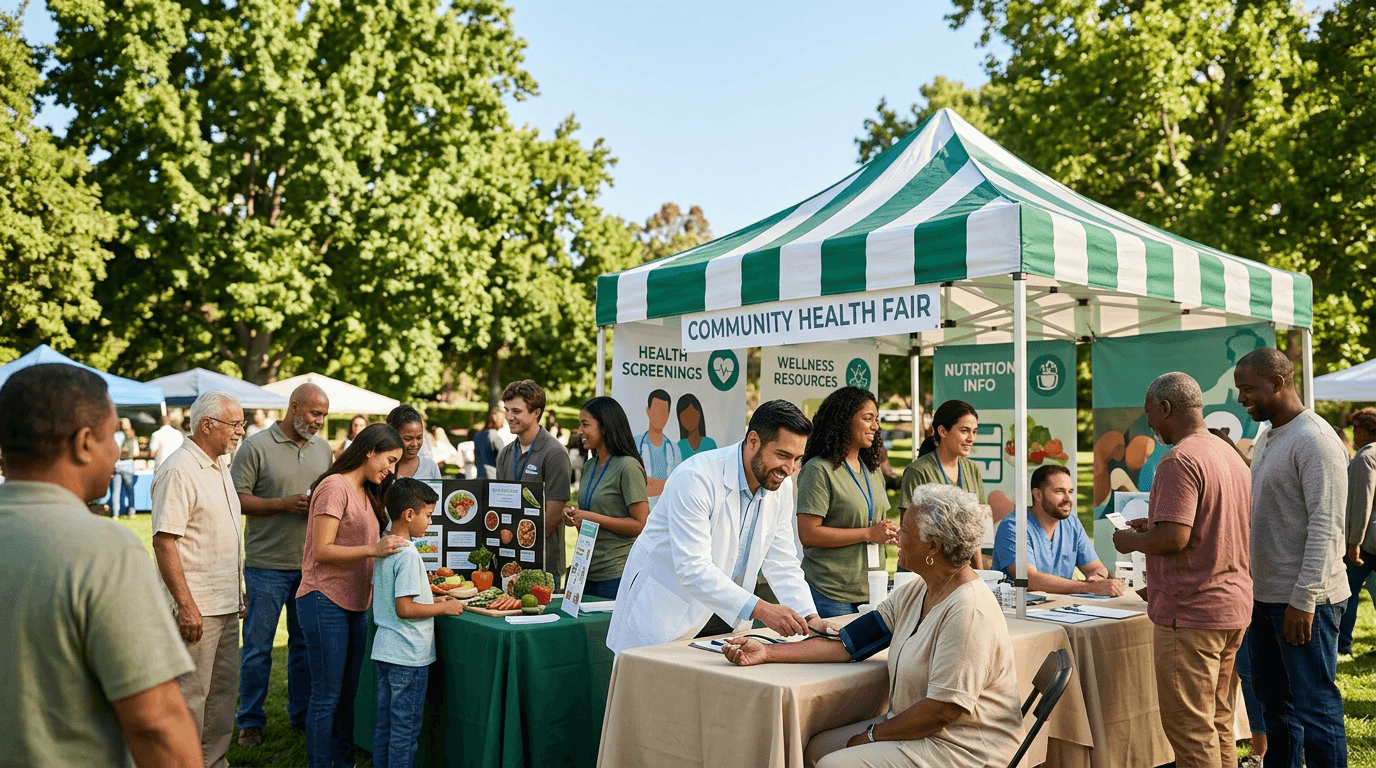
Attend community health events. Health fairs, community meetings, foundation open houses, and hospital advisory board meetings are all opportunities to introduce yourself and your pharmacy's community health vision.
Schedule introductory meetings. Call community foundation program officers, hospital community benefit directors, and health department leaders. Ask: "What are the biggest health challenges you're trying to address, and how might a pharmacy-based program help?"
Volunteer for community health initiatives. Serve on local health advisory boards, participate in community health needs assessments, join county health improvement coalitions. Visibility builds trust.
Share your data. If your pharmacy is already doing clinical work beyond dispensing — even informally — start documenting it. Community funders want to see that you're already engaged, not just looking for money to start.
Step 3: Design a Fundable Program
Community funders evaluate programs differently than federal agencies. They care less about technical jargon and more about:
- Clear community need — What specific health problem are you solving, and who benefits?
- Practical approach — How exactly does the program work? What happens when a patient walks through the door?
- Measurable impact — How will you know it's working? What will you count and track?
- Community engagement — How will you reach the people who need it most?
- Sustainability — What happens when the grant ends?
Program design template for community funders:
The Problem: "Our county has a diabetes prevalence rate of X%, with Y% of residents lacking access to preventive health services. The nearest endocrinologist is Z miles away."
The Solution: "Our pharmacy will launch a pharmacist-led metabolic health program offering body composition analysis, nutritional counseling, chronic disease monitoring, and coordinated care with primary care providers."
The Reach: "We will enroll X patients in the first year, targeting uninsured and underinsured residents in our service area."
The Measurement: "We will track enrollment, retention, clinical metrics (blood pressure, A1C, body composition), patient satisfaction, and healthcare utilization changes."
The Sustainability: "After the grant period, the program will sustain through cash-pay memberships, employer wellness contracts, and insurance reimbursement for pharmacist clinical services."
Step 4: Start with a Pilot
Community funders love pilots. A small, well-executed pilot program funded by a community grant demonstrates proof of concept that unlocks larger funding:
- $5,000–$10,000 from a community foundation funds a 3-month pilot with 25 patients
- Pilot results document patient engagement, clinical improvements, and community interest
- Pilot data strengthens applications to state grants, HRSA programs, and hospital partnerships
- Pilot success stories create media coverage and community awareness
The pilot doesn't need to be perfect. It needs to demonstrate demand, engagement, and early results.
Dr. Kathy Campbell, PharmD
Founder, Wellness Pharmacy Network
With decades of experience transforming community pharmacies into wellness destinations, Dr. Campbell has pioneered the integration of Food-as-Medicine programs, metabolic health tracking, and preventive care models into independent pharmacy practice. She leads the RX Institute in its mission to equip pharmacists with the tools and training to become the front line of community health.
Employer Partnerships as Community Funding
Don't overlook local employers as a community funding source. Employers with 50+ employees are actively seeking community health partners to support employee wellness, reduce healthcare costs, and meet workplace health program requirements.
What employers will fund:
- Employee metabolic health screening programs hosted at your pharmacy
- Wellness program participation for employees and dependents
- Corporate sponsorship of community health events you organize
- Direct contracts for pharmacist-led health coaching and chronic disease management
How to approach employers:
- Identify the 5–10 largest employers in your community
- Research their current wellness programs and benefits
- Propose a pharmacy-based employee wellness program with specific cost-per-participant pricing and expected outcomes
- Offer a pilot program at reduced cost to demonstrate value
Employer contracts create recurring revenue that sustains programs beyond grant periods — exactly what every other funder wants to see in your sustainability plan.
The Community Funding Multiplier Effect
Community grants create a multiplier effect that compounds over time:
- Community foundation pilot grant ($10,000) → validates your model and generates early data
- Hospital partnership ($25,000–$50,000) → expands program reach and adds clinical credibility
- Health department contract ($15,000) → adds a recurring revenue stream and government endorsement
- State grant application (leveraging community results) → accesses larger transformation dollars
- Federal grant application (leveraging all of the above) → positions for $200,000+ HRSA or USDA awards
Each layer of community funding strengthens the next application. No pharmacy goes from zero to a $300,000 federal grant. But many pharmacies go from a $10,000 community pilot to a fully funded transformation program within 18–24 months.
Your Community Funding Action Plan
Week 1: Identify your top 5 community funding sources (foundations, hospitals, health departments, employers, and civic organizations). Read available CHNAs and foundation priorities.
Week 2: Schedule introductory meetings with 2–3 community funders. Prepare a one-page concept document describing your pharmacy's community health program.
Week 3: Draft a pilot program proposal. Keep it simple: problem, solution, reach, measurement, budget, sustainability. Target $5,000–$15,000 for a 3-month pilot.
Week 4: Submit your first LOI or application. Begin documenting every clinical encounter, community interaction, and health outcome your pharmacy produces.
"Our pharmacy is a trusted community health access point proposing a pilot wellness program that addresses locally identified health priorities. We have documented community need, a structured intervention model, measurable outcomes targets, and a clear path to sustainability through partnerships and diversified revenue."
This is the statement that opens community foundation doors. It's specific, local, credible, and actionable — everything a community funder wants to hear.
Download the Community Grant Strategy Template
Get actionable strategies and frameworks you can implement today.
Download Free Guide